
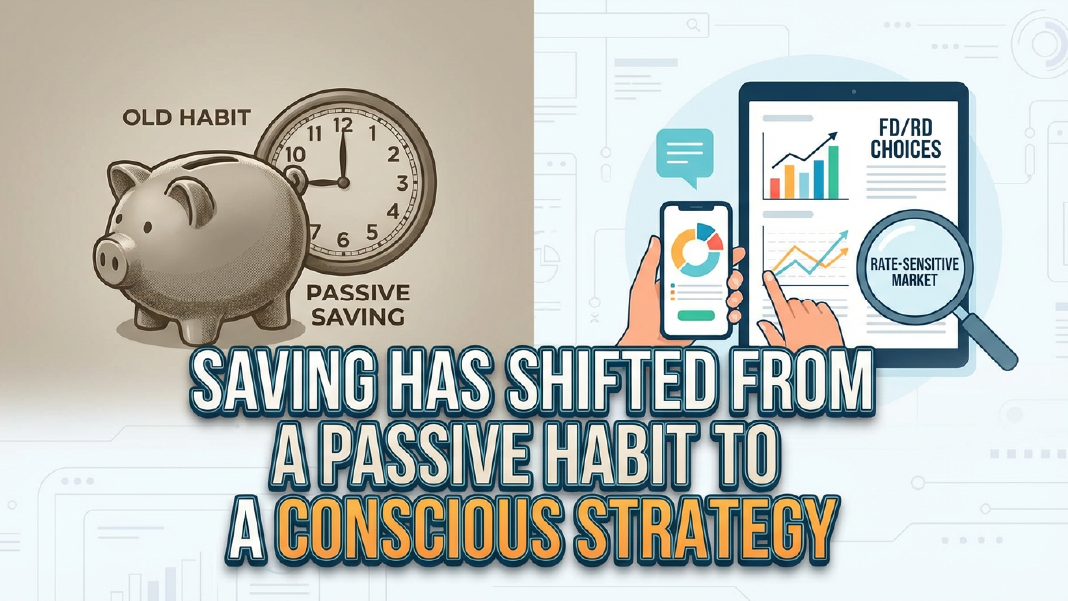
The New Savings Mindset: FD/RD Choices in a Rate-Sensitive Market
Saving in Nepal was once a largely habitual decision. Fixed Deposits (FD) and Recurring Deposits (RD) were opened because that’s what responsible people did. Interest rates were relatively stable, choices were limited, and savers rarely questioned timing, tenure, or flexibility.
That approach no longer fits today’s reality.
Nepali savers are now operating in a rate-sensitive environment where deposit rates move more frequently, information is instantly available, and switching banks is no longer a big emotional or logistical hurdle. As a result, saving has shifted from a passive habit to a conscious strategy.
1) Interest Rates Now Shape Behaviour, Not Just Returns
Interest rates are no longer background numbers — they actively influence decisions.
When banks announce higher FD rates, deposits move quickly. When rates soften, people delay locking funds or choose shorter tenures. Savers have become noticeably alert to when they invest, not just where.
This shift shows a growing understanding that locking money at the wrong time has a cost. A slightly lower rate with flexibility can sometimes be smarter than a higher rate with a long lock-in. Savers are not chasing returns blindly; they are managing uncertainty.
That mindset itself is new.
2) Fixed Deposit vs Recurring Deposit: A Choice Based on Purpose, Not Preference
Earlier, many people chose between FD and RD based on convenience or advice from bank staff. Today, the choice is far more intentional.
Fixed Deposits are increasingly used when a lump sum is already available, and the saver believes current rates are reasonably attractive. They are seen as a way to protect capital while earning predictable returns, especially for short- to medium-term goals.
Recurring Deposits, on the other hand, are chosen for discipline and planning. Monthly contributions suit salaried individuals and households that want to build savings gradually. RD users are also more comfortable with the idea that rates may improve over time, making consistent saving more important than locking a single rate today.
The key change is this: FD and RD are no longer substitutes; they are tools with distinct roles.
| If your priority is… | FD tends to fit better | RD tends to fit better |
|---|---|---|
| You already have a lump sum | Yes | Not necessary |
| You want discipline through monthly savings | Not ideal | Yes |
| You want predictable returns on a fixed amount | Yes | Depends on structure |
| You expect rate changes and want flexibility | Depends on tenure | Often easier to stay consistent |
| You may need partial liquidity | Check terms carefully | Check terms carefully |
3) Tenure Matters More Than It Used To
One of the clearest behavioural shifts is around tenure. Previously, a longer tenure almost automatically meant better value. Now, savers actively question long lock-ins.
In a market where rates fluctuate, flexibility carries its own value. Many people are willing to accept slightly lower returns in exchange for the ability to reinvest later at better rates.
This is why you increasingly see:
- Shorter tenures are becoming more popular
- Staggered deposits (splitting money across multiple tenures) instead of one long FD
- A mindset of “keep options open” rather than “lock and forget.”
Savings decisions are now tactical, not static.
4) Digital Comparison Has Redefined Trust
Digital access has quietly changed who savers trust. People no longer rely only on their “main bank.” They check rates online, compare tenure-wise returns, and look for clear explanations of conditions via platforms like Saral Banking Sewa. Transparency has become more important than familiarity.
Banks that clearly explain FD and RD terms, including penalties, payout frequency, and rate applicability, gain credibility faster. Those that rely only on brand history or verbal explanations struggle to compete.
In a rate-sensitive market, trust is built through clarity, not comfort.
5) Where Misinformation Still Affects Savers
Even with better information access, saving decisions aren’t free from confusion. The issue isn’t a lack of information. It’s selective attention.
Many savers still treat “up to X% interest” as a guaranteed return without noticing the conditions attached. Others focus only on the headline rate and ignore penalties for premature withdrawal or changes in payout structure.
The problem isn’t a lack of information; it’s selective attention. People scan instead of reading, especially when rates are changing quickly. This is where structured comparison becomes essential: the rate matters, but the conditions often matter more.
Red flags to watch (especially in fast-moving rate periods)
- “Up to” rates with unclear eligibility
- Very attractive rates tied to strict lock-ins or conditions
- Unclear premature withdrawal rules or penalty calculation
- Vague payout/compounding descriptions
- Terms that are explained only verbally, not clearly documented
6) The Emerging Saver in Nepal
Today’s Nepali saver is more aware, more cautious, and more involved. Savings decisions are reviewed, adjusted, and sometimes delayed, all signs of financial maturity.
FD and RD remain trusted products, but they are no longer automatic choices. They are evaluated, compared with the help of digital platforms like Saral Banking Sewa, and aligned with personal cash flow and goals. Saving has become active decision-making, and that’s a healthy shift.
.png)
Closing Thought
The new savings mindset isn’t about reacting to every rate change. It’s about understanding how rates, tenure, and flexibility work together.
In a rate-sensitive market, the smartest savers aren’t the most aggressive ones. They’re the ones who choose deliberately, with clarity, patience, and a plan.