
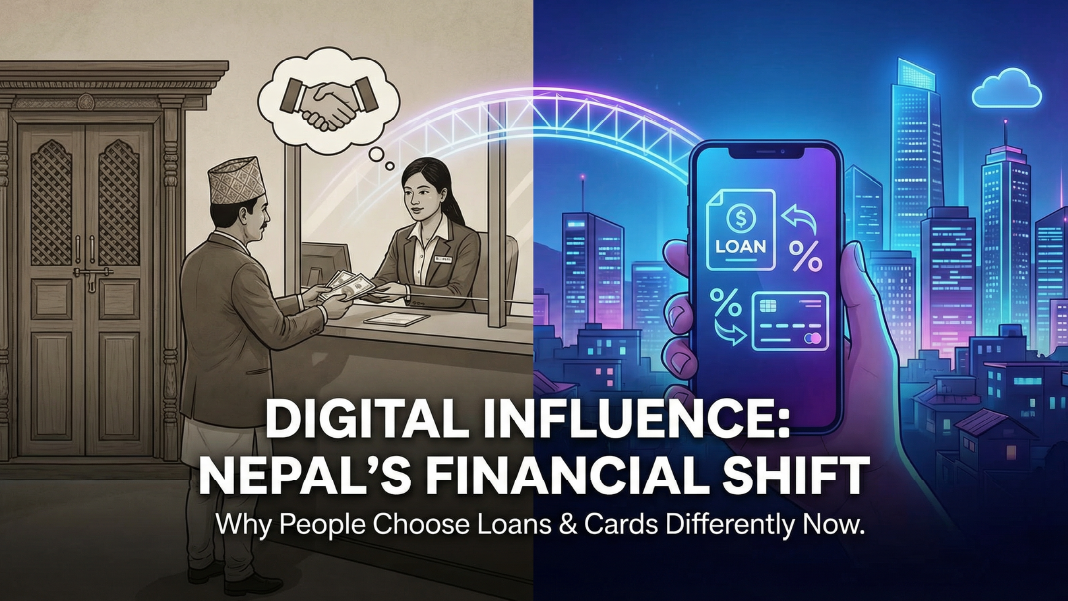
Digital Influence on Financial Decisions in Nepal: Why People Choose Loans and Credit Cards Differently Now
Not long ago, financial decisions in Nepal followed a familiar routine. You visited a bank branch, spoke to a staff member, compared options verbally, and decided mostly on trust or convenience. Today, that process has quietly but completely changed.
Smartphones, digital banking, fintech platforms, and social media have reshaped how Nepalis think about loans and credit cards. Decisions that once depended on personal relationships now depend on screens, comparisons, reviews, and speed. This shift isn’t just about technology; it’s about mindset.
Let’s explore how digital influence is changing financial decision-making in Nepal — and why people now choose loans and credit cards very differently.
What “Digital Influence” Really Means in Money Decisions
In practical terms, digital influence is not one thing. It’s a combination of:
- Targeted ads and time-bound offers (festival cashbacks, “limited-time” benefits)
- Content creators and explainers (YouTube/TikTok finance content, reels)
- App UX that reduces friction (pre-filled forms, digital KYC, “Apply Now” flows)
- “Pre-approved” messaging and instant eligibility checks
- Social proof: comments, reviews, screenshots of limits, reward stories
- Fintech alternatives: wallets, BNPL-style offers, micro-lending visibility
It shapes what people notice first, what feels trustworthy, and what feels “easy enough to try.”
1. Access to Information Has Changed the Game
The biggest shift is simple: information is no longer scarce.
Bank websites, fintech platforms, comparison portals, and YouTube explainers allow people to check interest rates, eligibility, repayment tenure, and fees before stepping into a branch, or sometimes without stepping in at all. Even first-time borrowers can now understand the difference between personal loans, professional loans, EMI options, and credit card billing cycles.
This access has reduced blind borrowing. People ask sharper questions, negotiate better, and avoid products that don’t suit their income. Financial products are no longer mysterious; they’re searchable.
In short, digital access has turned borrowers from passive listeners into active decision-makers.
2. Social Proof Matters More Than Sales Pitch
In Nepal, recommendations have always mattered. What’s changed is where those recommendations come from.
Instead of only asking relatives or friends, people now rely on online reviews, Facebook comments, TikTok explainers, and WhatsApp groups. A bank or credit card that trends positively online builds trust faster than one that only advertises aggressively.
If users complain publicly about hidden charges or poor service, it spreads quickly. On the other hand, digital praise — cashback stories, reward benefits, smooth loan approvals — heavily influences choices.
This shift has forced financial institutions to compete not just on rates, but on reputation.
3. Convenience Has Become a Deciding Factor
Digital convenience isn’t a bonus anymore — it’s an expectation.
Loan applications that can be started online, credit cards with digital statements, mobile banking apps that show real-time dues, and instant notifications have made traditional paperwork feel outdated. For salaried professionals, freelancers, and young earners, time matters as much as cost.
Many people now choose a slightly higher interest loan or a specific credit card simply because the application process is smoother, faster, and less stressful.
Queues don’t sell anymore. Convenience does.
4. The Psychology Shift: EMI Thinking vs Total Cost Thinking
One of the biggest changes in borrowing behavior is “monthly EMI thinking.” Nowadays, people ask: “Can I manage the EMI?” more than: “How much will I pay in total?”
EMI thinking is not wrong, but it can become incomplete when it ignores fees, tenure, and total interest.
A simple habit: before saying yes to any loan, use an EMI calculator to test different tenures. Then ask the second question: what does a longer tenure do to total cost? The EMI may look lighter, but the overall payment can rise.
.png)
5. Personalized Digital Marketing Shapes Choices
Ever noticed how loan ads or credit card offers seem perfectly timed? That’s not luck.
Banks and fintech platforms increasingly use customer data, salary deposits, transaction history, and spending behavior to show tailored offers. A credit card with fuel cashback appears when fuel expenses rise. A personal loan offer shows up after frequent large transactions.
This personalization influences decisions subtly. People feel the product is “made for them,” reducing hesitation and speeding up acceptance.
The danger? Emotional acceptance without deep comparison. The advantage? Better product-user fit, when used wisely.
6. Digital Tools Improve Financial Awareness
Loan EMI calculators, eligibility checkers, credit card interest simulators, and budgeting apps are quietly improving financial literacy in Nepal.
Before committing, users can now calculate monthly burden, total interest payable, and repayment timelines. This visibility helps borrowers avoid over-commitment at least in theory.
Many people now choose smaller loan amounts or prefer credit cards for short-term expenses because they understand cost differences better than before.
Knowledge doesn’t eliminate risk, but it definitely reduces reckless borrowing.
7. Lifestyle Aspirations Are Digitally Amplified
Social media doesn’t just influence fashion or travel; it influences finance.
From smartphones and bikes to weddings and foreign education, digital platforms showcase lifestyles that feel immediately achievable with the help of loans or credit cards. “Buy now, pay later” thinking has become normalized.
Credit cards are no longer seen only as emergency tools but as lifestyle enablers. Personal loans are framed as bridges to goals, not last-resort options.
This emotional push plays a major role in how people choose between loan products and revolving credit.
8. Rise of Fintech and Alternative Credit Options
Traditional banks are no longer the only players.
Digital wallets, BNPL services, micro-lending apps, and platform-based credit solutions have entered the Nepali market. These options appeal especially to younger users and small earners who may not qualify easily for bank loans.
Speed and accessibility attract users, though often at higher costs. The digital influence here lies in availability — people choose what’s visible, fast, and easy to access.
Choice has expanded, but responsibility has become more important than ever.
9. Digital Presence Equals Trust
Today, a bank or financial institution without a strong digital presence feels unreliable regardless of its history.
Clear websites, transparent product pages, quick customer support, and active digital communication signal credibility. Institutions that fail to explain terms clearly online lose trust, especially among younger users.
In modern Nepal, trust is built digitally before it’s built personally.
The New Buyer Journey: Search, Compare, Apply (and Where Misinformation Creeps In)
Digital access hasn’t just changed what people choose; it has changed how they decide. Today, a typical loan or credit card journey in Nepal looks like this:
- Search: People start with Google, YouTube explainers, TikTok videos, or quick advice from friends and family.
- Compare: They compare using screenshots, forwarded posts, social media claims, or headline-level information, often in a hurry.
- Apply: Applications are submitted through apps or websites, sometimes followed by a branch visit later.
This journey feels efficient. But it has a weak point.
.png)
Where Misinformation Enters
Misinformation rarely comes from outright lies. It usually enters during the comparison stage. People tend to compare:
- Cashback percentages instead of eligibility conditions
- EMI amounts instead of the total repayment value
- Advertised benefits instead of actual limits
Phrases like “up to X% cashback” are often treated as guaranteed. Time-bound messages such as “offer ending soon” create urgency, discouraging people from reading the fine print. The result? Decisions made on highlights, not terms.
What Actually Helps
The solution isn’t fear or avoidance. Its structure.
A simple comparison framework, looking at eligibility, total cost, usage limits, and repayment behavior, dramatically improves decision quality. When people compare like-for-like, loans and credit cards stop feeling confusing and start feeling manageable.
Digital tools should reduce confusion, not accelerate it. And when used correctly, they do exactly that.
Conclusion: Decisions Are Smarter, Faster and More Influenced
Digital influence hasn’t eliminated risk from financial decisions in Nepal, but it has reshaped how people think, compare, and choose. Loans and credit cards are now selected based on transparency, convenience, reputation, and digital experience — not just interest rates.
The smartest borrowers today aren’t the ones who borrow less, but the ones who borrow with awareness. And in Nepal’s evolving financial landscape, digital influence is no longer optional — it’s central.
Choose wisely. Scroll carefully. Borrow responsibly.